This second Revolver article came a little quicker than anticipated as I clearly do not know how to read calendars. Easter was coming up and -as per tradition- that’s one of our yearly trips to visit family in Ottawa. Because, why else would one go to Ottawa?
The Scene
Ottawa, Odàwàg in modern Algonquin, is situated on the south-side of the Rideau River, on the borders of Ontario and Québec, and is the capital of Canada. The city itself was founded in 1826 but the Ottawa Valley area has been habitable for over 10,000 years. Roughly 6,000 years before present there were robust trading networks present and 3,500 year-old evidence of continuously existing settlements were found in this area.
Here’s a measure of distance for you: this is Ontario on the left and Québec on the right. The bottom left marker is Toronto, the middle marker is Ottawa (on the Ontario-Québec border), and the top marker is Cape Wolstenholme. That’s about 1,780km straight north from Toronto. It’s 28km further north than the northernmost Inuit community in Québec, called Ivujivik. There is no ice here…for 20 days in summer, that is.
It is roughly a 4-hour drive from Toronto to Ottawa in good weather. The train doesn’t take much longer, if it doesn’t get held up by freight trains, on-track protests, or simply breaks down (some cars have been in use since the 40s and 50s…). There are -finally- new train sets available but really, this would be an ideal location for a high-speed corridor from (beyond) Toronto via Ottawa straight up to Montréal and Québec city, connecting 3 of the 4 most populous cities in Canada. Even more if the track would continue west via Mississauga to, I don’t know, the border and connect to Detroit and/or New York or something?
Our Ottawa trips usually consist of lots of family-time, some nature hikes here and there, some restauranting or museuming, and -of course- tons of food. This time was not much different. Over the past decade-and-a-bit I’ve seen the food scene diversify steadily, but the museums have always been very good. Nature walks aren’t bad either but one should cross over into Gatineau on the other side of the river for the good stuff. There you’ll find the lakes, hills and mountains of South Québec start to literally lift up the scenery. This time however, I took a walk along one of the major streets here: Bank Street.
The Camera
After last trips’ disappointment I decided to rely on a trusty old friend: a Minolta Maxxum 7000 (first generation with the original XX), coupled with a basic 50mm f/1.7 lens (also an early version). I know this camera will not fail me, not in the usual sense anyway. It is not build like a tank but I like it. A lot.
I first got my hands on one of these puppies a few years ago (it was a birthday present!) and have not looked back since. I simply love the design, the way the camera as a machine fits fair and square in its own era, but is still very much useable 40 years later. Which is kind of a feat because 1980s electronics were not always that…reliable, let’s say. I also have a Program Back, though I’ve never gotten around to install that as -in hindsight- I’m not sure it would be very useful to me.
The easy-to-read display, easy-to-remember button locations, interchangeable battery grip, decent selection of original lenses (I have a 24mm, 50mm and 35-70mm), and solid feel in hand make it one of my favourite old cameras. It does go through batteries quick, which has surprised me in the field once or twice, but then again it takes simple AA batteries, so there’s really no issue there. If you remember to bring spares along.
Sure, autofocus is slow. I use manual focus mostly anyway. Batteries can corrode easily, so take them out. The battery grip tends to crackle. Mine have that too, but I really don’t mind. The LCD screen is prone to leaks, but I’ve been lucky to have 2 of these cameras without leaky screens. The camera can still take pictures and that’s all I care about.
The Film
Never playing it safe, this time I grabbed some 14-year expired Neopan 400 rolls out of storage, thinking ‘it’s black and white, 400ISO, how bad could it be?’
There’s not much I can say about the film other than that’s another one in a long line of discontinued stock from the Fuji company. I still have a few of these lying around, as well as their Japanese domestic market labelled ‘Presto’ versions. As Fuji black and white films go, I do not dislike it one bit. Introduced in 1978 and discontinued in 2013…what you can get is what you can get. I’d say: try and get some.
The Photographs

The Verdict
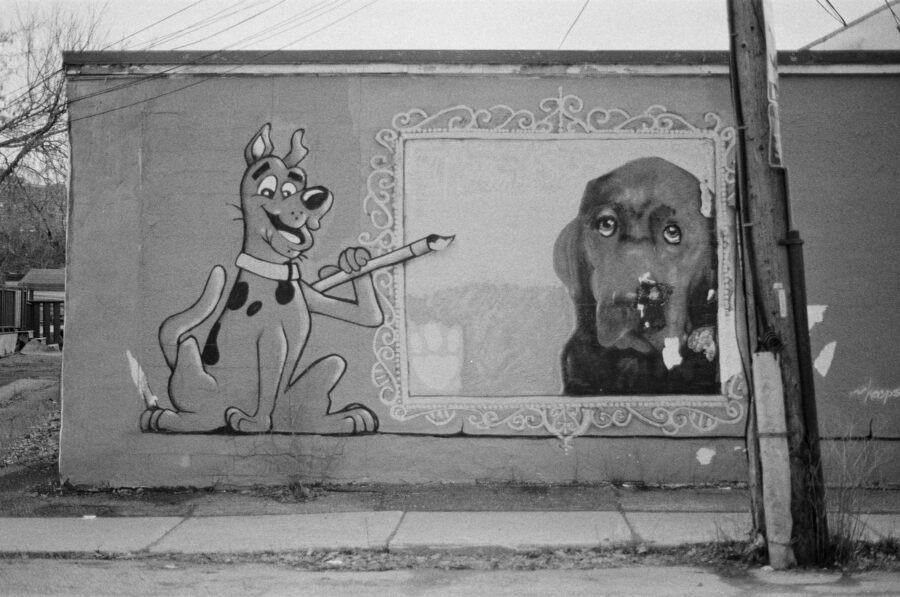
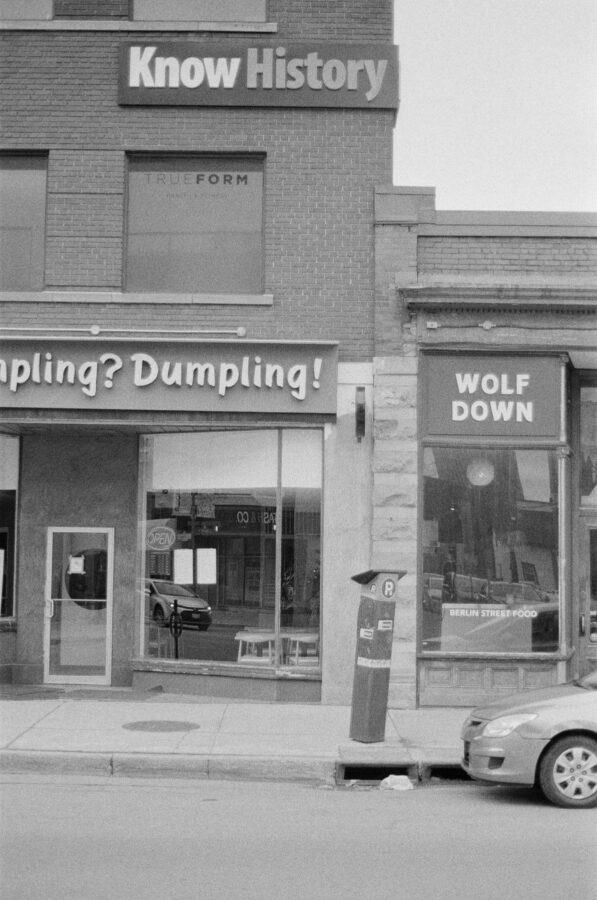
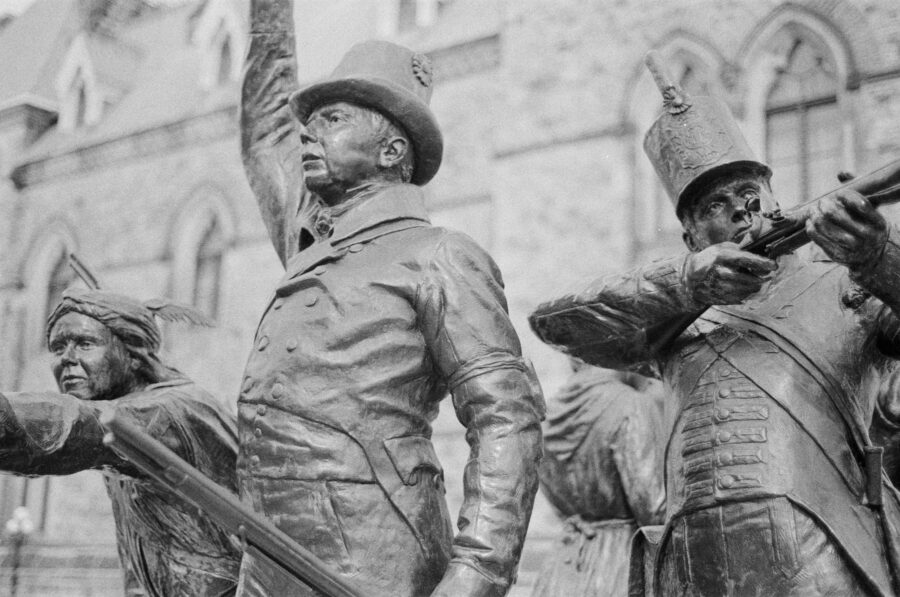
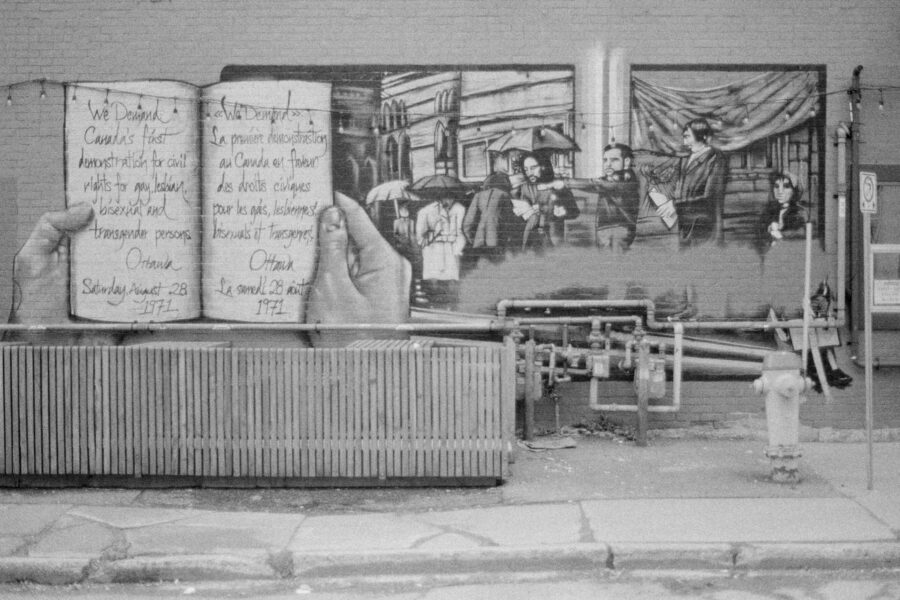
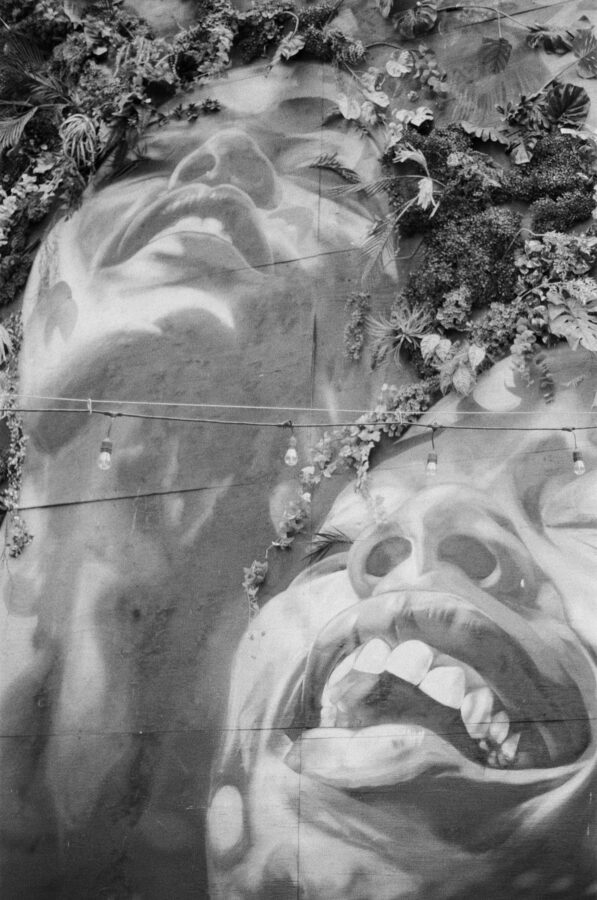
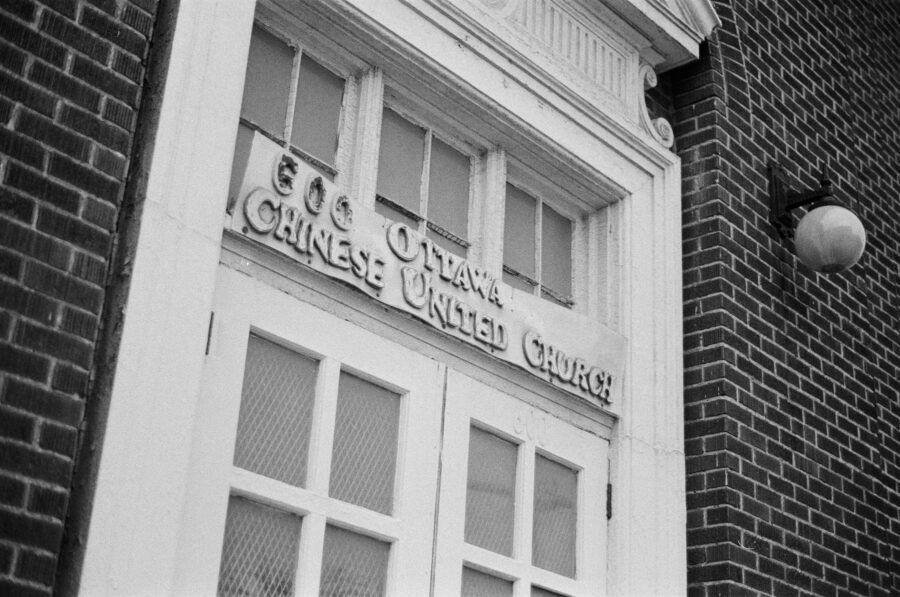
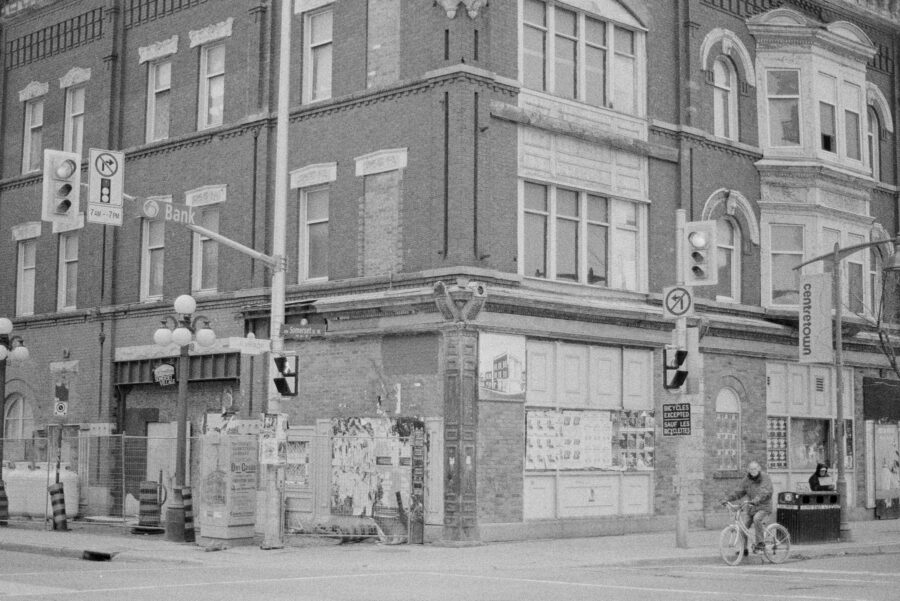
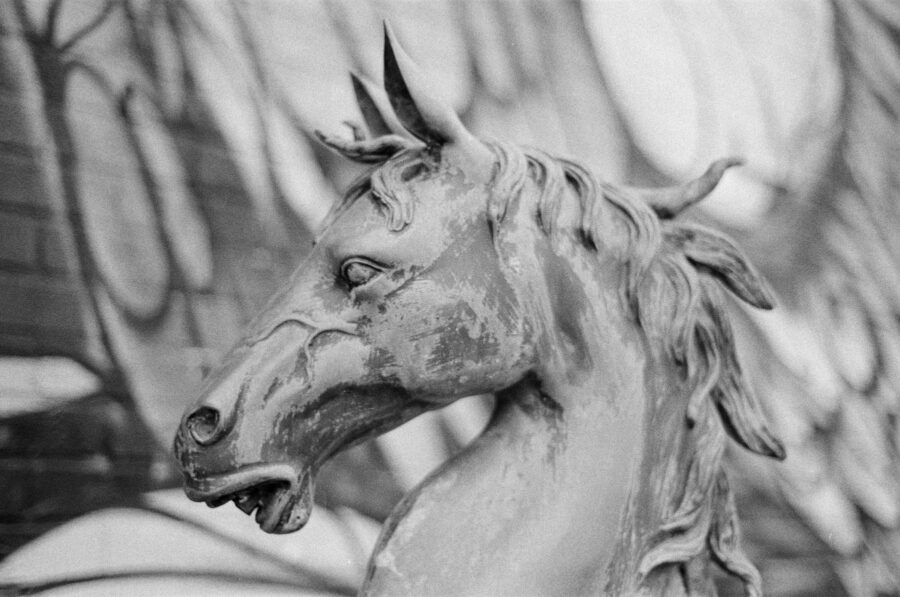
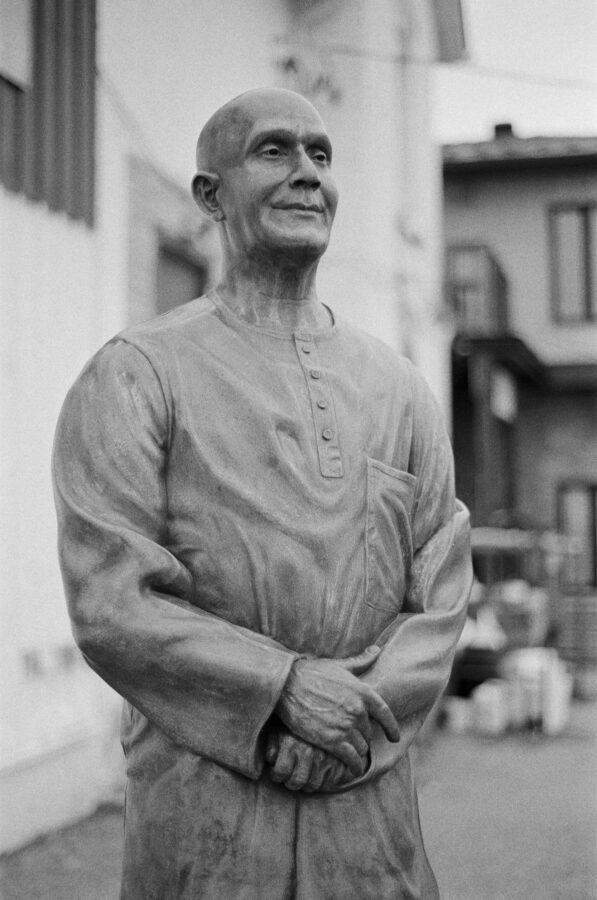
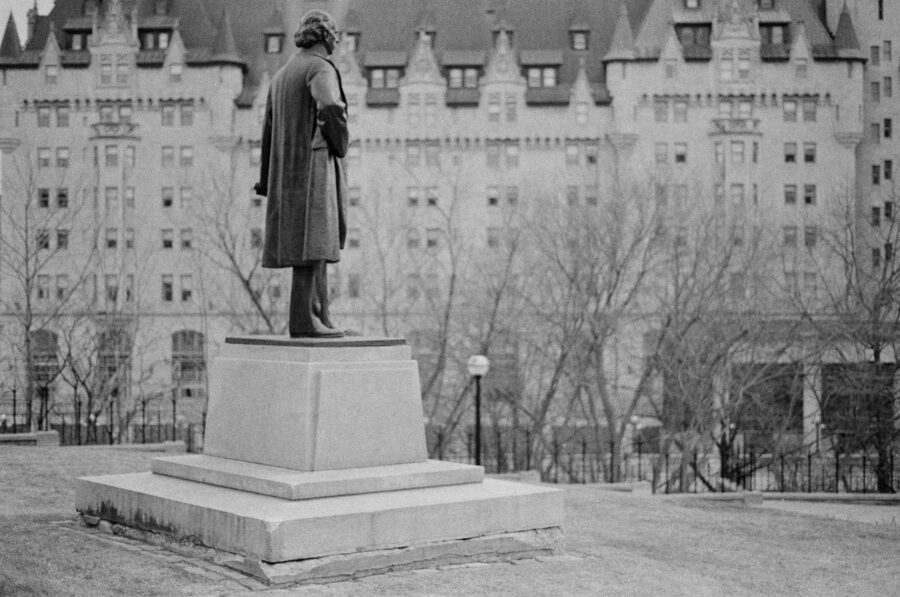
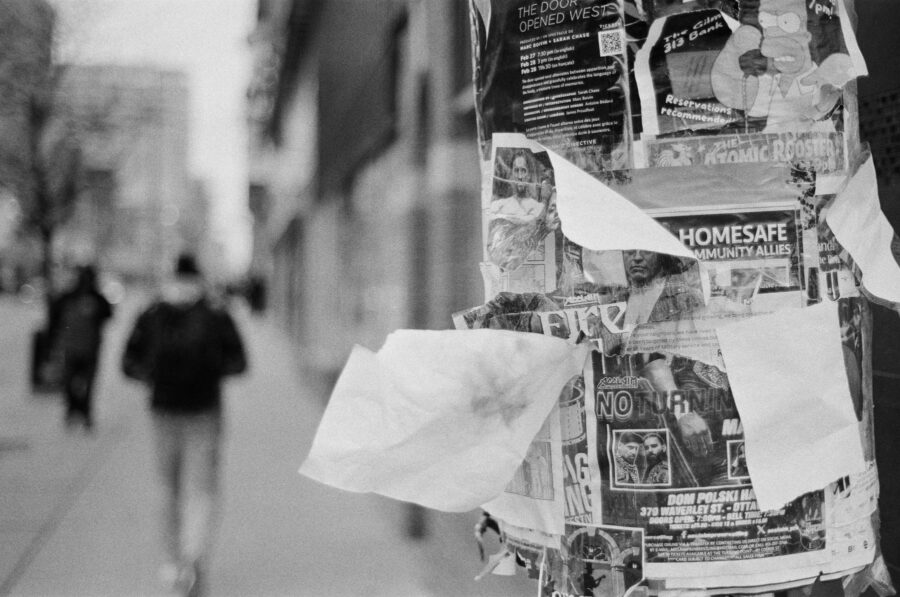
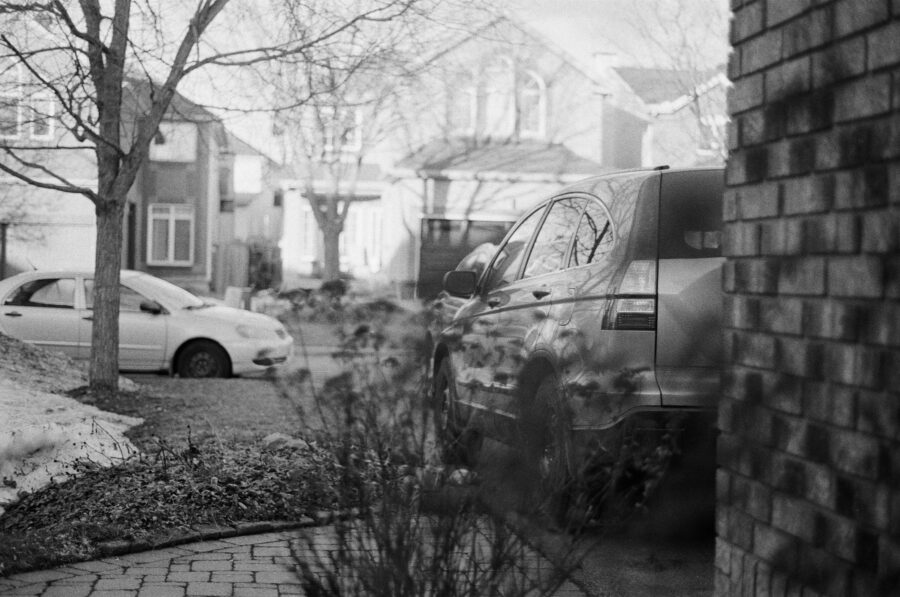
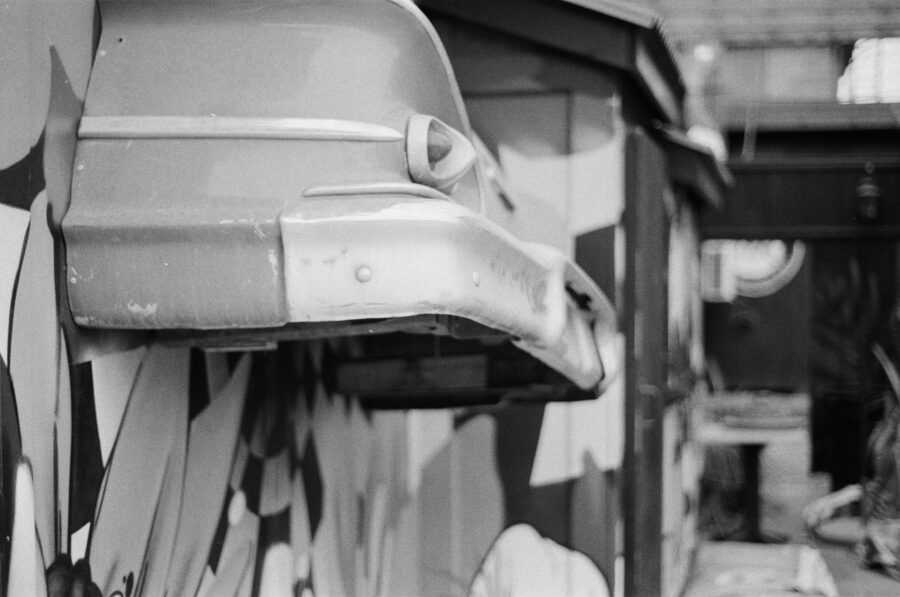
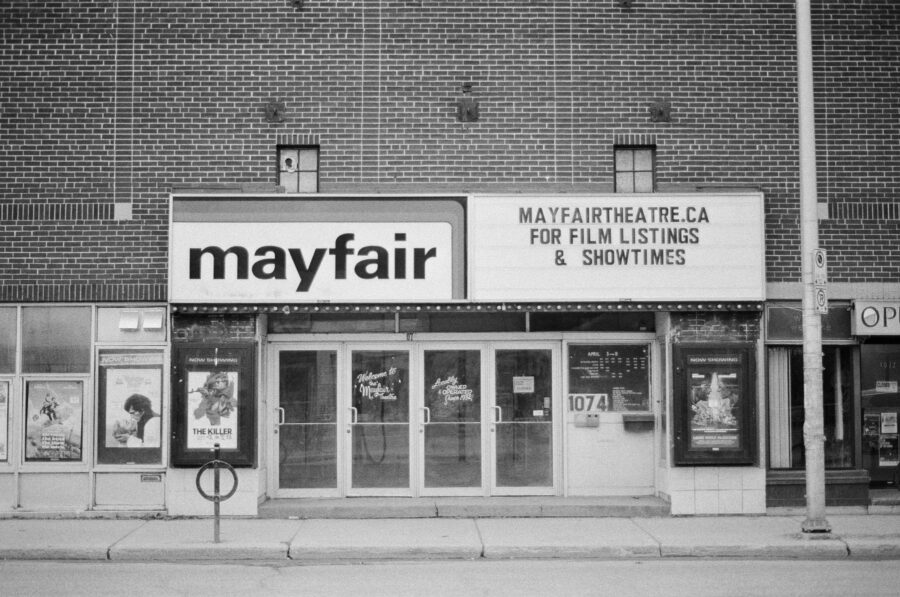
All of these photographs were taken along Bank Street in Ottawa, except for the one with the parked cars. Bank is sort of an interesting street. From run-down buildings to wayward statues and government offices, and everything in between can be found there. I’m sure I could spend hours more walking here but the weather was kinda cold so two hours was all that I could muster. It was also mostly overcast, hence I had some trouble getting my exposures right. Or maybe that was the camera. It’s a mystery.
But with the right exposure, this film turns out some nicely contrasty results. It’s grainier than I expected, which is fine, and tonality is nice and warm. No terribly underexposed pictures on this roll. The Minolta worked just fine though I have some questions about the focusing ring on the lens, as ‘infinite’ appears to not be quite that. Another mystery.
Would I go back to Bank Street? Not if I don’t have to. Ottawa in general isn’t the greatest of places to be in winter (sorry Ottawans, but it be cold here), unless you’re there for the museums or a Senators game – and as it turns out, we mostly only end up here in the cold season. So consider my opinion coloured.
Would I use this film for more serious projects? Probably not either, but it sure is a nice film to play around with. And the Easter egg? Finding an independent neighbourhood movie theatre on a main street. Next time I’m here I’ll probably just catch a movie at the Mayfair.
Leave a Reply
You must be logged in to post a comment.